Bomaker Polaris vs Formovie Theater Premium
Both are 4K triple-laser UST projectors, but they represent different generations. Formovie adds Google TV, native Netflix support, Dolby Vision/HDR10+ decoding and a shorter 0.21:1 throw ratio.
Specification comparison
| Category | Bomaker Polaris | Formovie Theater Premium |
|---|---|---|
| Resolution | 4K UHD | 4K UHD (3840×2160) |
| Brightness | 2,500 ANSI lumens, reported | 2,200 ISO lumens |
| Throw ratio | About 0.25:1, reported | 0.21:1 |
| HDR | HDR10 | Dolby Vision, HDR10+ decoding, HDR10, HLG |
| Smart platform | Older Android-based interface reported | Google TV with native Netflix |
| Audio | 2 × 10W, reported | 2 × 15W Bowers & Wilkins |
| Color gamut | Wide-gamut RGB laser design | 107% BT.2020 claimed |
How to interpret the differences
Formovie is the more modern all-in-one entertainment platform on paper: its certified Google TV environment and Dolby Vision support reduce the need for external boxes, while its 0.21:1 throw ratio can make furniture placement easier.
The Polaris proposition is different. If its current selling price is much lower and you already plan to use an Apple TV, Fire TV, Roku, console or disc player, the older smart interface matters less. Your room, screen and deal price become the deciding variables.
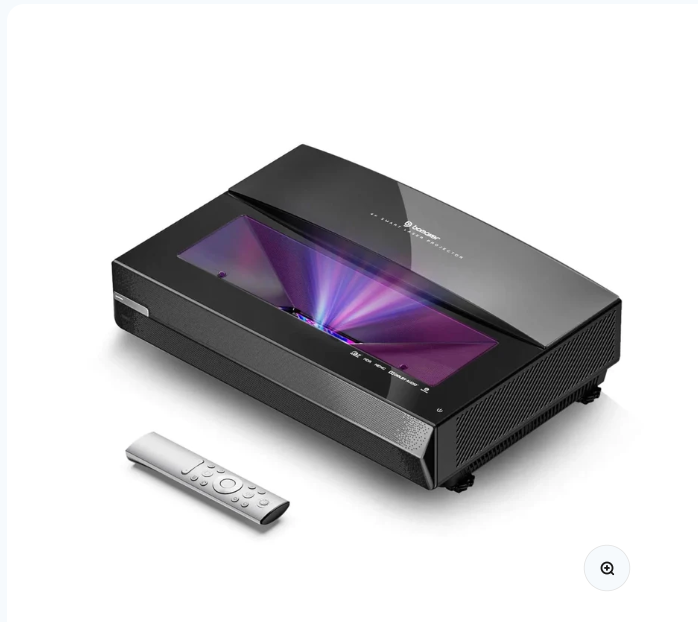
Bomaker Polaris 4K UST
4K ultra-short-throw projector with an RGB laser light engine and a reported 2,500 ANSI-lumen brightness rating. Check the merchant for current price, stock and shipping terms.
Research basis
Formovie specifications were checked against the manufacturer's Theater Premium materials. Polaris specifications are based on the current merchant listing and published 2021–2022 reviews.