UST projector buying guide: the seven checks that prevent bad setups
Ultra-short-throw projectors are easier to place than ceiling projectors, but they are not plug-and-forget TVs. Furniture depth, screen geometry and ambient light deserve equal attention.
Check the throw ratio
Throw ratio determines how far the optical system must sit from the image surface for a given picture width. Lower UST ratios can reduce cabinet depth requirements.
Choose screen size before furniture
Work backward from the image size, then confirm the projector's chassis position, lens offset, screen bottom height and cabinet depth.
Plan for a UST ALR screen
In a living room, a UST-specific ALR screen can reject a meaningful amount of light arriving from above while preserving light from the projector below.
Compare HDR support, not just “4K”
4K describes resolution. Dolby Vision, HDR10+, HDR10 and HLG describe HDR ecosystems. Support varies widely by projector generation.
Decide whether smart TV matters
If you use an external streamer or console, an older onboard OS can be less important. If you want one remote and native apps, newer Google TV models are easier.
For gaming, inspect the exact mode
Low-latency claims can depend on resolution and refresh rate. A projector might accept 4K/120 but quote its lowest latency at 1080p/240, so read the mode-specific fine print.
Budget for sound and cables
Integrated speakers are convenient, but a large image often benefits from external audio. Confirm eARC/ARC support and cable routing before the screen is mounted.
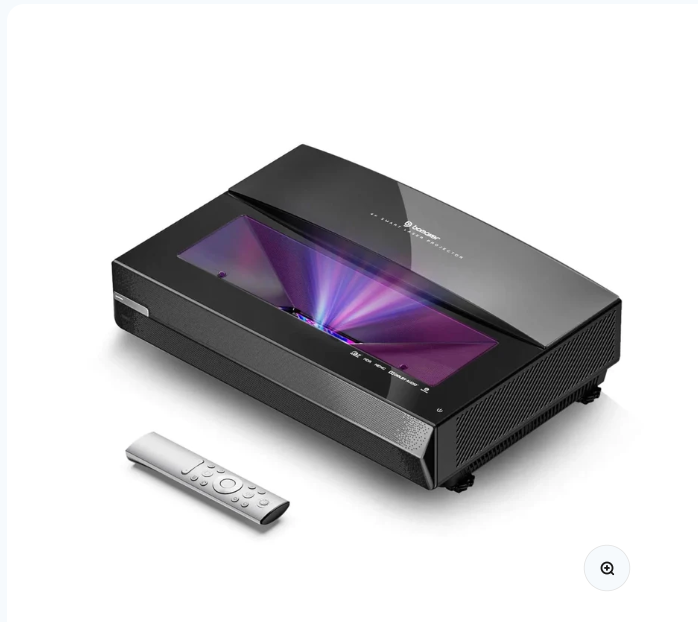
Bomaker Polaris 4K UST
4K ultra-short-throw projector with an RGB laser light engine and a reported 2,500 ANSI-lumen brightness rating. Check the merchant for current price, stock and shipping terms.