Big-screen home cinema, without the guesswork.
Laser Living Lab helps you compare ultra-short-throw projectors, understand screens and setup, and decide whether the Bomaker Polaris fits your room and priorities.
No claimed hands-on testing. Specs are based on manufacturer materials and published reviews; models and firmware can change.
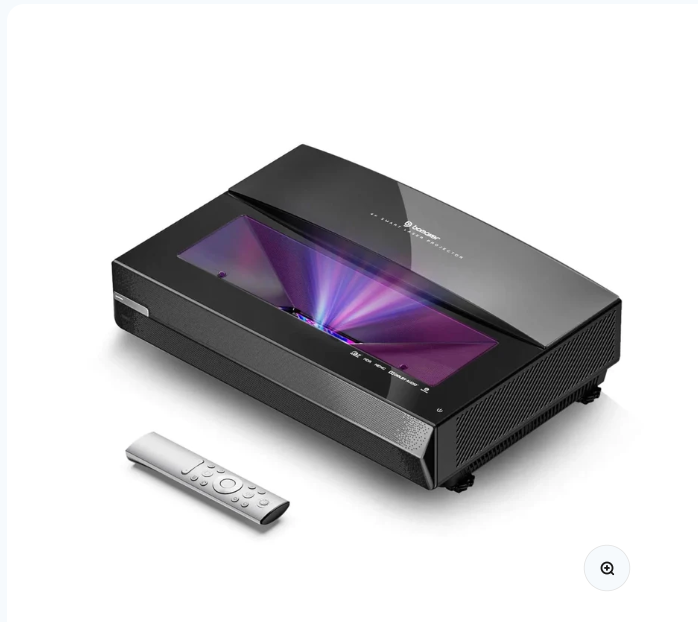
The Polaris is positioned as a 4K ultra-short-throw laser projector for large-format viewing from a short cabinet-to-wall distance.
Brightness claims use different standards across brands, so ANSI, ISO and IDMS figures should not be treated as perfectly interchangeable.
Triple-laser systems use separate red, green and blue laser sources to target a wide color gamut.
Polaris comparisons
Polaris vs Formovie Theater Premium
Legacy value proposition versus a newer 4K triple-laser UST with Google TV, Dolby Vision and 0.21:1 throw ratio.
Polaris vs Hisense PX3-PRO
Compare the Polaris with Hisense's 3,000 ANSI-lumen, 80–150-inch, Google TV-oriented TriChroma UST.
Polaris vs Epson LS800
Triple-laser DLP versus Epson's 3LCD design with 4,000-lumen color and white brightness ratings.
Polaris vs NexiGo Aurora Pro MKII
Compare with a newer ALPD 5.0 model offering Dolby Vision, HDR10+, 0.21:1 throw and gaming-focused inputs.
Build the whole room, not just the projector.
ALR screens for UST
Why screen type, room light and viewing angle can matter as much as projector specs.
UST projector setup
Cabinet depth, screen height, alignment, HDMI sources and eye-safety basics.
UST projector vs TV
Compare screen size flexibility, ambient-light behavior, installation and ownership tradeoffs.